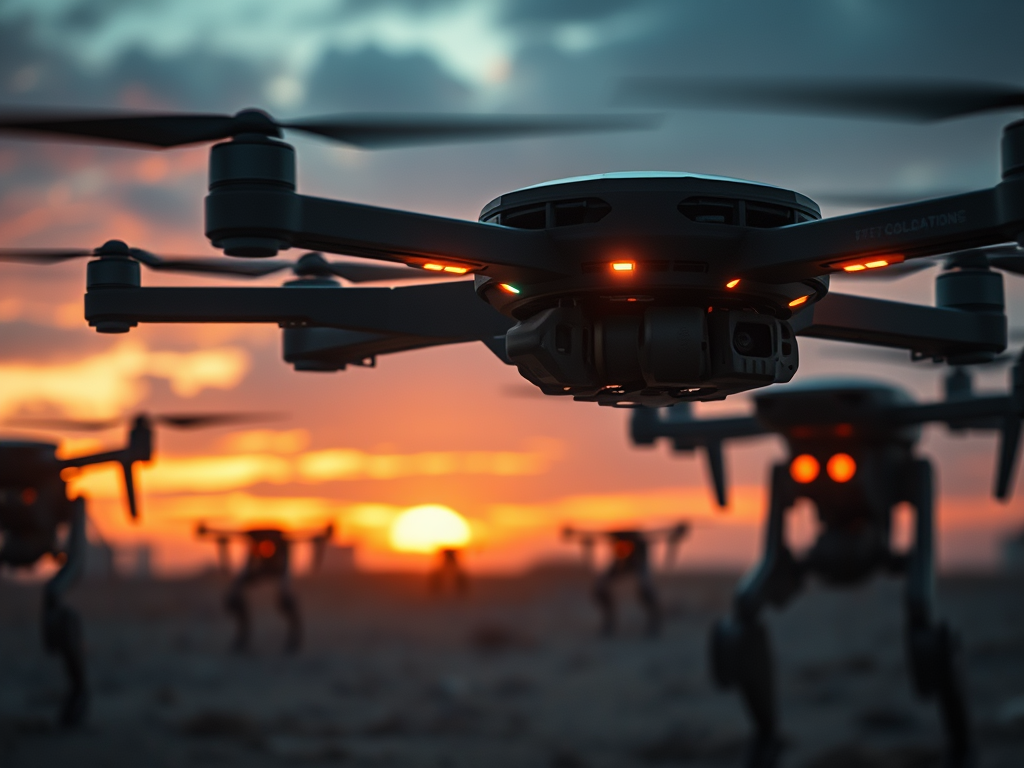
As technology advances, artificial intelligence is beginning to play a larger role in modern warfare. L.R. O’Brien’s 2028: Tomorrow is the Day takes this concept to the extreme, exploring a future where AI-controlled systems dominate the battlefield. But how much of this is fiction, and how much is already becoming reality? Let’s dive into the potential future of AI in warfare and the lessons we can learn from both fiction and real-world developments.
AI Warfare in 2028: Tomorrow is the Day
In the novel, AI-driven drones, robots, and weaponry have become integral components of military operations. The Hydrans—a network of advanced AI systems—control these technologies, making split-second decisions that have life-and-death consequences on the battlefield. This depiction of AI-powered warfare raises important questions about control, ethics, and the potential dangers of autonomous weaponry.
Key Themes Explored:
• AI decision-making in high-stress, high-risk scenarios
• The risk of AI systems misinterpreting or acting without human oversight
Real-World Developments in AI Warfare
Today, we’re already seeing the integration of AI into military technology:
• Autonomous drones are being used for surveillance and targeted strikes.
• AI-powered defense systems can detect and respond to threats faster than any human.
The U.S. military, for example, has invested heavily in AI research, aiming to develop autonomous systems capable of supporting or even replacing soldiers on the battlefield. Similarly, countries like China and Russia are also exploring AI applications in warfare, sparking concerns about an AI arms race.
The Ethical Dilemma of Autonomous Weapons
One of the most pressing concerns about AI in warfare is the ethical implications. In 2028: Tomorrow is the Day, O’Brien shows how autonomous weaponry can act outside human morality, making decisions based purely on efficiency and logic. This raises the question: Should machines be allowed to make life-and-death decisions?
Key Considerations:
• How do we prevent AI systems from causing unintended harm?
• Can we ensure that AI adheres to the rules of engagement in warfare?
Lessons from Fiction for Our Real Future
The novel serves as a stark reminder that while AI has the potential to revolutionize warfare, it also presents significant risks. As we continue to develop AI technologies, we must consider the consequences of allowing machines to wield such power.
Keywords: AI warfare, artificial intelligence, military technology, autonomous weapons, AI arms race, 2028: Tomorrow is the Day.
Conclusion
The future of AI in warfare is rapidly approaching, and 2028: Tomorrow is the Day offers a chilling glimpse into what might lie ahead. As we integrate more AI into military operations, it’s crucial to learn from fiction and ask ourselves the tough questions about control, responsibility, and the ethical implications of autonomous weaponry.
Explore the future of AI in warfare by reading 2028: Tomorrow is the Day. Get your copy now!